No Limit Drag Racing 2
- 4.1
- Rating
- 10.00M
- Installs
- Free
- Price

 Analysis by App-foxy
I spent time with No Limit Drag Racing 2 as a mobile racing game, paying attention not only to the launches and upgrades but also to how comfortably different people can read, control, and enjoy it. Developed by Battle Creek Games, LLC, it focuses on short drag races, car tuning, progression, and 3D street-racing presentation. That combination makes it more specialized than a general arcade racer: the fun comes from preparing a car and executing a clean run rather than steering through long circuits.
My first impression was that it is easy to understand at a basic level. You choose a car, make adjustments, and race over a short distance. The compact format suits quick sessions, especially when I only have a few minutes available. At the same time, the tuning side gives the game more depth than a simple tap-to-race title. It asks me to pay attention to how the car behaves and to treat each run as feedback for the next setup.
The game is free to download and is marked for Everyone, while optional purchases range from $2.99 to $124.99 per item. It has reached over 10 million installs, with a 4.1 average from around 97 thousand ratings and about 19 thousand written reviews. Those figures suggest a well-established audience, but they do not remove the need to decide whether its particular style of racing suits you.
You May Also Like

 Blood Strike: 2.5 Anniversary
Blood Strike’s Loadouts Turn Every Drop Into a Tactical Gamble
A close look at Blood Strike’s custom loadouts: how fast access to signature weapons reshapes its battle royale rhythm, rewards preparation, and narrows the gap between fights.

 Pandora - Music & Podcasts
Pandora’s Music Is Easy to Start, but Harder to Recover
Pandora’s strength is its low-effort path from a seed to a station. Its weak spot is how much confidence it asks you to place in connection, setup, and quiet recovery.

 8 Ball Pool
 Is Built on Rivalries, Rematches, and Routine
A close look at the rivalries, rematches, shared routines, and unanswered safety questions that turn a quick pool match into a persistent mobile community.

 Samsung Music
’s Quiet Strength Is Playing What You Already Own
Its reach comes less from spectacle than from dependable access to a personal library. That simplicity is both the app’s strongest retention engine and its ceiling.

 AccuWeather: Weather Radar
AccuWeather Review: A Quick, Clear Forecast for Everyday Decisions
For everyday plans, the best forecast is the one you can understand quickly. AccuWeather makes rain timing, radar, and local conditions easy to act on, with a few trade-offs.

 Hill Climb Racing
Why Hill Climb Racing Still Turns Crashes Into One More Run
A tiny car, a bumpy hill and one more upgrade: Hill Climb Racing keeps resurfacing because its simple chaos makes every near-miss feel personal.
More From Our News Desk



How clearly the game communicates what to do
The strongest part of the presentation is its focused structure. Drag racing has a naturally clear objective: get the car moving well, shift at the right moments, and reach the finish before the opponent. I do not have to learn a large open world or remember a complicated route. That helps when I am tired, distracted, or introducing the game to someone who does not usually play racing games.
The tuning layer changes that simplicity in a useful way. A player who only wants quick races can concentrate on the basic launch and shifting rhythm, while someone more analytical can spend longer adjusting the car. This separation is valuable because it lets different players use the same game at different levels. I can treat it as a quick reaction game, or I can approach it as a small workshop where every change needs to be tested on the strip.
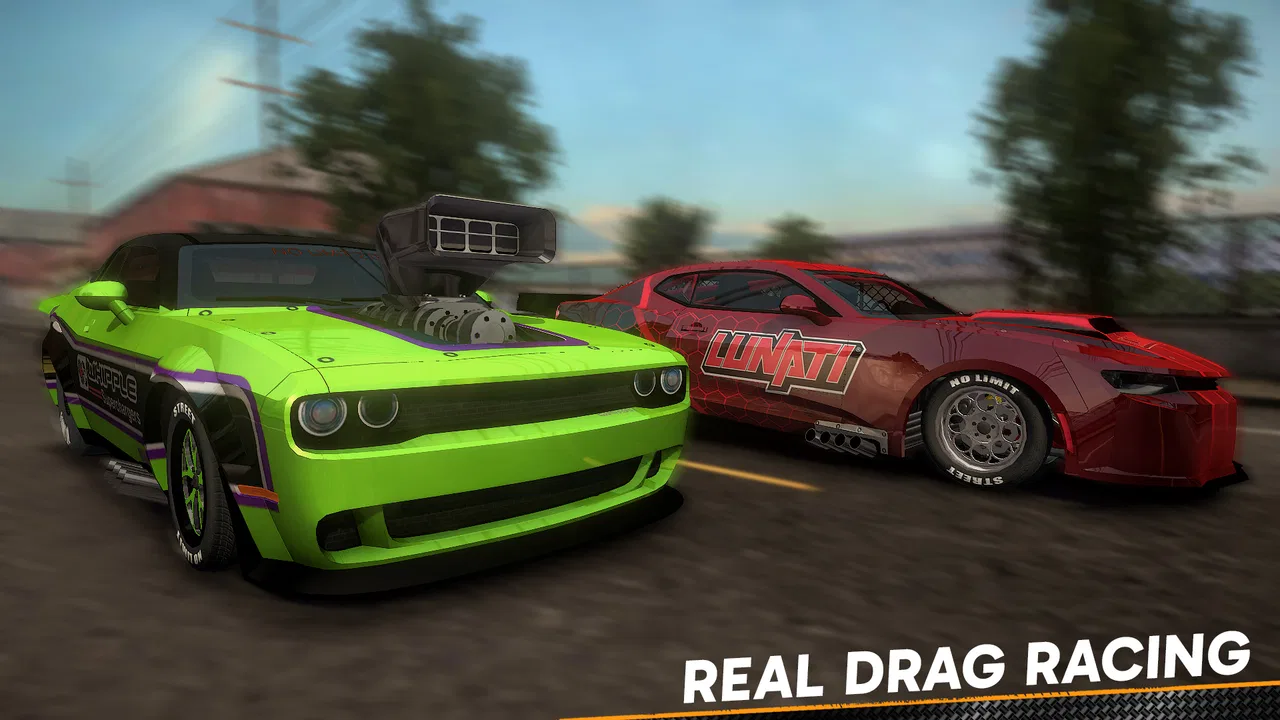
Visual clarity is more mixed. The 3D cars and street-racing scenes give the game a stronger sense of place than a flat menu-driven racer, but detailed presentation can also make small interface elements harder to parse on a compact phone. Before committing to a long tuning session, I would recommend checking whether the text, buttons, and indicators remain comfortable on your particular screen. That is especially important for players who rely on larger visual targets or who find dense menus tiring.
I also found that the game’s structure rewards a deliberate reading habit. Rather than changing several settings at once, I get better information by making one adjustment, running the car, and comparing the result. This is a practical accessibility tip as much as a tuning tip: it reduces the amount of information I need to hold in my head and makes cause and effect easier to follow.
A good fit for short, repeatable decisions
Because a drag race is brief, the game works well for players who prefer repeated, predictable tasks over long sessions. I can focus on one action sequence, finish, and pause without losing the thread of a lengthy event. That also makes it easier to share the experience with a friend or family member who wants to try a race without learning an entire racing campaign.
There is a trade-off, though. The same narrow focus may feel repetitive to someone who wants cornering, exploration, varied track layouts, or a large collection of event types. Compared with a conventional circuit racer, this game gives up route variety in exchange for mechanical concentration. If your enjoyment comes from braking into corners and finding racing lines, the drag-strip format may feel limited rather than focused.
Controls, timing, and different ways of playing
The central challenge is timing. A successful run depends on reacting at the right moment and coordinating the launch and gear changes. That can feel satisfying when my hands and attention are cooperating, but it also creates a barrier for players with slower reactions, tremors, limited fine-motor control, or difficulty repeating rapid actions. A game built around short races can be approachable in theory while still demanding precise input in practice.
I would not describe this as a relaxed racing experience. Even though the races themselves are short, the important moments are concentrated. Missing a shift or mishandling the start can make the result feel decided quickly. For players who enjoy practicing a repeatable motion, that concentration is the appeal. For players who need generous timing windows or prefer steady steering, it may become frustrating.
The best way to make the game more manageable is to separate learning from competition. I would begin by treating early runs as experiments rather than tests of ability. Keep the car setup stable, learn the rhythm, and only then start changing the tuning. If I adjust the vehicle and the controls at the same time, I can no longer tell whether a poor result came from the setup or from my timing. That simple workflow makes the experience less confusing and helps players who need a slower learning curve.
Another useful approach is to play in short blocks. Repeating the same timing sequence for too long can increase fatigue, especially for people with motor or attention-related limitations. A few focused attempts followed by a break gives me a better chance of noticing what went wrong. It also prevents the game’s competitive side from turning a small mistake into an exhausting session.
For players with hearing-related needs, the game’s visual racing format is potentially more approachable than a title that depends heavily on spoken instructions, but I would still pay attention to how much information is communicated through sound during play. In any timing-based racer, visual confirmation matters. If an important cue is easy to miss without audio, that could affect the experience. I would test a few races with sound reduced or turned off before deciding whether the game feels comfortable.
Players sensitive to motion or visual intensity should also try the presentation in brief sessions first. Three-dimensional racing imagery, fast movement, and repeated launches can be exciting, but they may be tiring for some people. The short race format helps because I can stop between attempts, yet it does not automatically make the visual experience suitable for everyone.
Where the tuning system helps and where it asks more from you
The car-upgrade and tuning focus is one of the game’s most interesting inclusive qualities because it offers a second route to progress. If a player is struggling with pure reaction speed, careful preparation can make the experience feel less dependent on reflexes alone. That does not eliminate the need to control the car, but it gives thoughtful players something meaningful to work on between races.
At the same time, tuning can increase cognitive load. A player who finds multiple settings confusing may prefer to keep changes conservative and learn one adjustment at a time. I would avoid chasing the fastest possible setup immediately. A car that is slightly easier to control can be more enjoyable than one that looks stronger on paper but makes every launch harder to manage.
This is also where the free-to-play structure deserves attention. Optional purchases can make progression feel more convenient, but I would not treat spending as a solution to every difficult race. First, learn whether the problem is timing, setup, or simply an opponent that requires more practice. Spending before understanding the obstacle can make the game more expensive without making it more accessible.
Playing in real situations
I can see the game working well during a commute break, a waiting-room visit, or a short evening pause when I want something active but do not want to follow a long story. A realistic session for me would be to run a few races, review how the car behaved, make one tuning change, and stop. That rhythm gives the game a clear beginning and end, which is useful when my attention may be interrupted.
It is less suitable when I need a game that can be played discreetly without frequent visual focus. The important actions happen during the run, so I need to look at the screen and respond. I would not choose it while walking, multitasking around children, or doing anything that divides my attention. The short format makes it convenient, but it does not make it safe to play in every situation.
Screen size matters in everyday use. On a larger phone, cars, indicators, and control areas may feel easier to inspect. On a smaller display, the same concentration of information may require more effort. Players who use magnification or who prefer large touch targets should test the interface before investing time in progression. A game can be technically playable while still being uncomfortable after several minutes of squinting or repeated mis-taps.
Social play can also change the experience. The multiplayer street-racing emphasis gives the game a competitive angle that is different from racing only against predictable computer opponents. That can be motivating for players who enjoy comparing performance, but it may add pressure for anyone who needs a slower pace. I would spend time learning the car privately before treating multiplayer as the main attraction. Entering competitive races too early can make a controllable learning problem feel like a personal failure.
For families, the Everyone age rating makes the game easier to consider as a broadly suitable racing title, but I would still look at how individual players respond to competition and optional purchases. Younger or impulsive players may need clear spending boundaries because the purchase range reaches from small additions to much larger individual items. The right setup is not just about age; it is about whether the player can distinguish practice from progression pressure.
Barriers that remain after the initial learning period
The biggest remaining barrier is that the game’s core appeal and its main demand are the same thing: precise timing. There is no way around the fact that a player who cannot comfortably perform repeated, quick inputs may not get the full experience. Tuning can help, but it cannot turn a timing-centered drag racer into a slow, steering-based game.
Another barrier is repetition. The focused format is excellent for players who enjoy refining one sequence, yet it can become narrow for people who need constant novelty to stay engaged. Compared with a broad arcade racer, this title offers a smaller set of driving ideas and asks the player to find depth in setup and execution. I would skip it if your ideal mobile racer is about sightseeing, free driving, or dramatic track variety.
There is also a mental cost to optimization. The game can encourage me to keep chasing a better launch, a better shift, or a better car configuration. That loop is satisfying when I am in the mood for it, but it can become demanding when I simply want a casual race. Setting a personal stopping point helps: for example, finish after a clean run rather than continuing until every result improves.
Device compatibility is reasonably broad because the game supports Android eight and later, but support for an operating system does not guarantee identical comfort on every phone. Performance, screen dimensions, touch response, and visual scaling can all affect how accessible a timing-based game feels. I would judge the actual experience on the device being used, particularly if the player depends on precise taps or has difficulty with small interface elements.
The current version is 2.9.17, so keeping the app updated may be sensible for general compatibility. I would still avoid assuming that an update will solve a personal control or readability issue. Those concerns are often tied to the phone, the player’s needs, or the game’s fundamental design rather than to the version number.
My inclusive verdict after living with the drag-strip format
I think No Limit Drag Racing 2 is most successful when I approach it as a focused workshop-and-race game. It gives me a clear task, short attempts, meaningful vehicle preparation, and a competitive edge without requiring me to learn a full circuit. The developer’s decision to center the experience on drag racing makes it easier to understand than a sprawling racing game, while the tuning layer gives committed players room to experiment.
Its inclusive strengths are practical rather than formal: short sessions, a clear objective, a choice between quick races and deeper preparation, and a format that can be paused between attempts. Those qualities help players with limited time, fluctuating attention, or a preference for repeatable routines. The game also rewards a careful process, which means thoughtful preparation can matter alongside raw reflexes.
Its limits are equally clear. The most important actions depend on timing and repeated touch control. Visual motion and compact information may not suit every player, and the focused structure will disappoint anyone looking for corners, exploration, or broad event variety. Optional purchases also mean that families and players sensitive to spending pressure should decide their boundaries before progression becomes competitive.
I would recommend trying it if you enjoy improving a single run, adjusting a car, and seeing whether a small change produces a better result. I would choose a more relaxed or exploration-focused racer instead if you need wide timing windows, minimal visual concentration, or a driving experience built around steering rather than launches and shifts.
For me, the fairest way to judge it is not by asking whether it replaces every other racing game. It does not. Its value comes from doing one thing with unusual focus: turning a short straight-line race into a cycle of preparation, control, and refinement. If that concentrated loop matches the way you like to play, the free entry point makes it easy to explore without committing immediately. Just begin slowly, change one part of the setup at a time, take breaks when the timing becomes tiring, and treat purchases as optional conveniences rather than requirements for enjoying the drive.
FAQs for No Limit Drag Racing 2
01What are the main features of No Limit Drag Racing 2?
No Limit Drag Racing 2 offers an extensive car customization system, realistic physics, and a variety of racing modes. Players can modify their cars with a wide range of parts and accessories, participate in multiplayer races, and join online tournaments. The game also features a career mode with different levels of difficulty.
02Is No Limit Drag Racing 2 free to play?
Yes, No Limit Drag Racing 2 is free to download and play. However, it offers in-app purchases for players who want to enhance their gaming experience. These purchases can include cosmetic items, vehicle upgrades, and other advantages that can help progress through the game more quickly.
03Can I play No Limit Drag Racing 2 offline?
No Limit Drag Racing 2 requires an internet connection for certain features, especially those involving multiplayer races and tournaments. However, you can enjoy some aspects of the game, like the career mode, offline. For a complete experience, including community interactions and updates, being online is recommended.
04What devices support No Limit Drag Racing 2?
No Limit Drag Racing 2 is available for both Android and iOS devices. It requires a relatively modern smartphone or tablet to run smoothly due to its detailed graphics and physics engine. Ensure your device meets the minimum operating system requirements: Android 4.4 or iOS 10.0 and above.
05How does the multiplayer mode work in No Limit Drag Racing 2?
The multiplayer mode in No Limit Drag Racing 2 allows players to compete against others from around the world in real-time. You can join races or create your own with friends. The game uses a matchmaking system to pair players with similar skill levels, ensuring fair and competitive races.
Pros
- Realistic car customization options.
- Competitive multiplayer mode.
- Frequent updates and events.
- Intuitive controls for easy gameplay.
- Engaging career progression.
Cons
- In-app purchases can be costly.
- Occasional server connectivity issues.
- Requires a stable internet connection.
- Limited offline gameplay features.
- Some ads are intrusive.

No Limit Drag Racing 2
Gallery